
















The hospitality industry is more competitive than ever. Hotels face constant pressure from online travel agencies (OTAs), rising customer acquisition costs, and evolving guest expectations. While OTAs can help generate visibility, they often reduce profit margins through commission fees and limit direct relationships with guests.
Many hotel websites attract visitors but fail to convert them into direct reservations. Potential guests compare rates across multiple platforms, abandon bookings due to complicated user experiences, or leave because they lack trust in the hotel’s website. As a result, hotels lose valuable revenue to third-party booking channels.
Every missed direct booking means more than just lost income. It often means paying high OTA commissions, losing access to guest data, and missing opportunities to build long-term customer loyalty. With travelers increasingly expecting personalized experiences, instant information, mobile-friendly interfaces, and seamless booking journeys, outdated hotel websites struggle to compete.
In this blog post, you’ll discover 12 proven hotel website strategies that increase direct bookings, improve conversion rates, enhance user experience, and maximize revenue. Whether you manage a boutique hotel, luxury resort, business hotel, or vacation property, these trends will help you create a high-performing website that turns more visitors into paying guests.
Increase direct bookings with Easy Hotel Booking now!
Why Hotel Websites Have Become the Most Important Direct Booking Channel
Hotel websites have become the most important direct booking channel in hospitality because they now sit at the center of how travelers discover, evaluate, and complete reservations—often outperforming traditional online travel agencies (OTAs) like Booking.com and Expedia Group in both profitability and guest relationship value.
Here’s why this shift has happened.
i. Hotels want to avoid OTA commission fees
OTAs typically charge hotels 15–25% commission per booking. That’s a major hit to profit margins.
By pushing guests to book directly on hotel websites (like those of Marriott International or Hilton Worldwide), hotels keep more revenue and reinvest it into pricing, upgrades, and loyalty benefits.
ii. Stronger loyalty programs drive direct bookings
Hotel chains have built powerful loyalty ecosystems:
- Member-only discounts
- Free upgrades and late checkout
- Points and free nights
- Personalized offers
These benefits are often only available on official hotel websites, making direct booking more attractive than OTA listings.
iii. Better control over pricing and guest experience
When booking directly, hotels control:
- Room availability accuracy
- Package bundling (breakfast, spa, transfers)
- Upselling (room upgrades, add-ons)
- Policies and flexibility messaging
This reduces “disconnects” that often happen when OTAs display limited or delayed information.
iv. Improved digital marketing and SEO visibility
Hotels now invest heavily in:
- Google Hotel Ads
- Search engine optimization (SEO)
- Metasearch platforms like Google Hotels and Trivago
- Retargeting ads (e.g., “You viewed this hotel” campaigns)
This means users often start their journey on Google and end up booking on the hotel’s own website instead of an OTA.
v. Mobile-first booking behavior
Modern travelers increasingly book on mobile. Hotel websites have improved with:
- Fast-loading pages
- One-click booking flows
- Apple Pay / Google Pay integration
- Chat-based assistance
This reduces the friction advantage that OTAs once had.
vi. First-party data is extremely valuable
Direct bookings give hotels access to:
- Email addresses
- Stay preferences
- Booking patterns
- Lifetime customer value data
OTAs keep most of this data for themselves, limiting the hotel’s ability to personalize future marketing.
vii. Personalization and AI-driven offers
Hotels can now dynamically adjust pricing and offers based on:
- Location
- Past stays
- Device type
- Booking behavior
This level of personalization is easier on their own websites than on third-party platforms.
viii. COVID-19 accelerated the shift
During and after the pandemic:
- Hotels pushed “book direct for flexibility.”
- Travelers prioritized cancellation policies
- Digital adoption increased sharply
This permanently strengthened direct booking habits.
ix. Brand trust has improved significantly
Previously, travelers often trusted OTAs more. That has changed because:
- Major hotel brands have stronger digital presence
- Transparent pricing is now standard
- Review integration is widespread
As a result, booking directly no longer feels risky.
Common Hotel Website Mistakes That Reduce Direct Reservations
Hotel websites are supposed to convert visitors into bookings but many of them leak revenue because of avoidable mistakes. Here are the most common ones that directly reduce direct reservations.
Slow website performance
Speed is one of the biggest silent killers of direct bookings. If a hotel website takes too long to load, users rarely wait. They usually return to search results and book through faster platforms like Booking.com or similar OTAs. Even a one–two second delay can noticeably reduce conversion rates, especially on mobile networks.
Complicated booking flow
Many hotel sites lose guests during the booking process itself. When users are forced through too many screens, unclear room selection steps, or account creation walls, they often abandon the process. OTAs like Expedia Group feel easier because they standardize and simplify this flow.
Weak mobile experience
Since most hotel searches happen on phones, mobile design matters more than desktop. Problems like tiny buttons, difficult calendars, or layout shifts create frustration. If the experience feels harder than an app or OTA site, users quickly switch away.
Confusing pricing and hidden costs
One of the fastest ways to lose trust is unclear pricing. If taxes, fees, or cancellation rules appear late in the process, users feel uncertain. OTAs tend to present this information more consistently, which makes comparison easier and reduces hesitation.
Lack of trust signals
Users need reassurance before entering payment details. When a hotel site lacks reviews, verified ratings, secure payment indicators, or clear contact details, it feels less reliable. Established brands such as Marriott International or Hilton Worldwide benefit heavily because their trust signals are already well recognized.
Poor room presentation
If rooms are not clearly differentiated, users struggle to decide. Limited photos, missing size information, or vague descriptions increase uncertainty. When people can’t confidently compare options, they often leave for OTAs where the comparison format is more standardized.
Weak direct booking incentive
A common mistake is not clearly explaining why booking direct is better. Without visible perks like member discounts, flexible cancellation, or loyalty rewards, users see no reason to avoid third-party platforms even when direct booking would benefit the hotel more.
Limited visibility on search and metasearch
Some hotel websites rely too heavily on brand searches. Without strong SEO, Google Hotel Ads presence, or metasearch integration, they miss users at the discovery stage entirely. That means fewer people even reach the booking page.
No personalization or returning-user recognition
Modern users expect websites to remember them or adapt offers. When every visit feels generic, it reduces engagement. OTAs increasingly feel more “tailored” simply because they invest heavily in behavioral tracking and personalization systems.
Booking errors and unclear recovery paths
Technical friction also plays a big role. If availability fails, payments don’t process smoothly, or error messages are unclear, users rarely retry. They simply move on to another platform.
12 Hotel Website Trends That Increase Direct Reservations
Hotel websites are evolving fast because they’re no longer just digital brochures. They’re now full conversion engines competing directly with OTAs like Booking.com and Expedia Group. The trends below show what actually moves the needle for direct bookings today.
1. Mobile-first booking experiences
Hotels are now designing websites primarily for mobile users rather than desktop users. This shift reflects real behavior: most travelers search, compare, and book rooms on their phones, often in short sessions while commuting or multitasking.
A mobile-first design focuses on fast loading, simple navigation, and easy-to-use calendars and payment flows. When done well, it reduces friction and makes booking feel as natural as using an app, which significantly increases direct conversion rates.
2. One-page or ultra-short booking flows
Booking engines are being redesigned to reduce the number of steps between selecting a room and completing payment. Instead of navigating multiple pages, users can now complete everything in a single streamlined flow.
This matters because every extra step increases drop-off rates. The smoother and more compact the process, the less opportunity there is for users to abandon the booking and switch to OTAs like Booking.com.
3. Real-time pricing and availability
Modern hotel websites increasingly rely on systems that update prices and room availability instantly. This ensures that what users see is always accurate, reducing confusion and frustration during checkout.
It also helps hotels maintain consistency across channels. When pricing mismatches occur, users tend to lose trust and often verify rates on platforms like Expedia Group before committing.
4. Stronger direct booking incentives
Hotels now actively promote reasons to book directly rather than through third parties. These incentives include exclusive discounts, complimentary services, and flexible cancellation policies that are not always available elsewhere.
Major chains such as Marriott International and Hilton Worldwide use loyalty programs to reinforce this behavior, making direct booking feel more rewarding over time.
5. AI-powered personalization
Websites are becoming more adaptive by analyzing user behavior in real time. Returning visitors may see customized offers, suggested room types, or targeted promotions based on previous interactions.
This personalization reduces decision fatigue and increases relevance. Instead of showing the same generic content to everyone, hotels can guide users toward the most suitable options, improving the likelihood of conversion.
6. Integrated chat and instant assistance
Many hotel websites now include live chat or AI assistants directly within the booking interface. This allows users to ask questions about availability, policies, or upgrades without leaving the page.
This reduces friction at critical decision points. When doubts are resolved instantly, users are less likely to abandon the booking process and more likely to complete it directly.
7. Visual-first storytelling
Hotels are increasingly using immersive visuals such as high-resolution galleries, videos, and 360-degree room tours. The goal is to reduce uncertainty and help users better imagine their stay.
Strong visuals build emotional confidence. When guests feel they understand the experience clearly, they are less likely to compare endlessly on OTAs and more likely to book directly.
8. Transparent total pricing display
Modern hotel websites are moving toward showing full pricing upfront, including taxes and fees. This eliminates the surprise costs that often appear late in the booking process.
Transparency builds trust and reduces abandonment. When users feel pricing is honest and predictable, they are less likely to cross-check with platforms like Booking.com before finalizing.
9. Metasearch integration
Hotels now rely heavily on metasearch platforms such as Google Hotels to drive traffic directly to their websites. These systems allow users to compare prices and click through to book directly.
This strategy ensures hotels remain visible during the discovery phase. Without it, many users would begin and end their journey entirely within OTAs like Expedia Group.
10. Loyalty-driven account ecosystems
Instead of forcing users to create accounts, hotels now tie account creation to rewards and benefits. This makes signing up feel optional but valuable rather than mandatory.
Brands like Marriott International and Hilton Worldwide use this approach to gradually build long-term customer relationships while increasing repeat direct bookings.
11. Faster, lightweight web design
Speed optimization has become a priority, with hotels reducing heavy scripts, compressing images, and simplifying page layouts. The goal is to make websites load instantly even on slower networks.
Faster websites not only improve user experience but also directly increase conversion rates. A delay of just a few seconds can push users back to search results and toward OTAs like Booking.com.
12. Post-booking engagement loops
Hotel websites are no longer focused only on the moment of booking. They now extend engagement through confirmation pages, emails, and pre-arrival offers.
This creates opportunities for upselling services like upgrades, spa packages, or late checkout. It also strengthens the relationship with the guest, increasing the chances of repeat direct bookings instead of third-party reliance.
Easy Hotel Booking Plugin That Turns Website Visitors Into Paying Guests
Most hotel websites don’t actually have a booking problem. They have a conversion problem. Visitors arrive, browse rooms, get confused, and leave for OTAs like Booking.com or Expedia Group because the booking experience feels faster and clearer elsewhere.
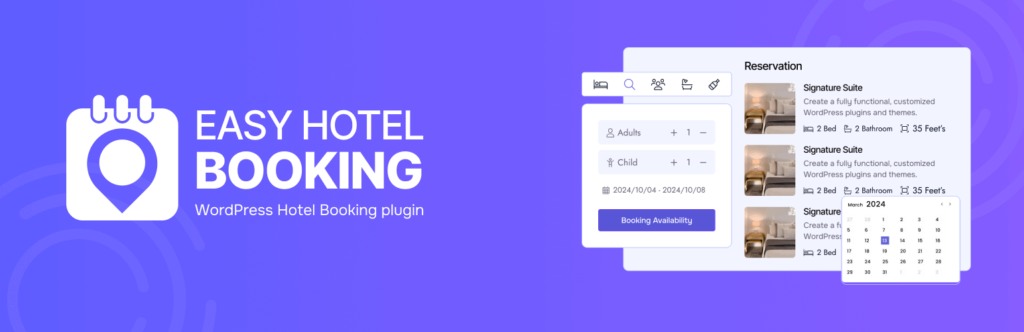
The Easy Hotel Booking plugin is built to fix exactly that. It transforms a static hotel website into a high-converting booking engine where guests can check availability, compare rooms, and complete payments in seconds without friction, confusion, or unnecessary steps.
Why this plugin increases direct bookings instantly
The biggest reason hotels lose revenue is not demand—it’s drop-off during the booking process. The plugin removes that friction by creating a clean, mobile-first experience where guests never feel stuck or unsure about what to do next.
Instead of redirecting users to external systems or overwhelming them with complex forms, it keeps everything inside a fast, guided flow. That means fewer abandoned sessions and more completed reservations directly on your website.
Built for how modern travelers actually book
Today’s guests don’t browse patiently—they decide quickly. The plugin is designed for that behavior, with a streamlined interface that works seamlessly on mobile, where most bookings begin.
Whether a guest is comparing dates, checking room types, or confirming payment, every step is simplified to reduce hesitation. The result is a booking experience that feels as easy as using an app, not a traditional hotel website.
More control, more revenue, better guest relationships
With direct booking handled on your own website, you keep full control over pricing, availability, and guest data instead of losing margin to platforms like Booking.com or Expedia Group.
That control allows you to build stronger guest relationships, offer personalized upgrades, and drive repeat bookings through your own brand rather than relying on third-party marketplaces.
Designed to convert, not just display rooms
Most hotel websites act like digital brochures. This plugin turns yours into a sales system.
It highlights availability in real time, reduces booking hesitation with clear pricing, and guides users toward completion instead of overwhelming them with options. Every detail is focused on one goal: turning interest into confirmed reservations.
The result: fewer clicks, more bookings
Hotels that simplify their booking experience consistently see higher direct conversion rates, lower dependency on OTAs, and stronger guest loyalty over time.
The Easy Hotel Booking plugin is not just an upgrade—it’s a shift from passive website traffic to active revenue generation.
If your website gets visitors but not enough bookings, this is the missing layer between browsing and revenue.
Final Thoughts
Hotel website trends that increase direct reservations are centered around delivering seamless, personalized, and trustworthy digital experiences. Mobile-first design, AI personalization, high-performance booking engines, trust signals, and conversion-focused UX are no longer optional—they are essential for attracting modern travelers and maximizing direct revenue.
Hotels that continuously optimize their websites for user experience and booking convenience can reduce OTA dependence, strengthen guest relationships, and achieve sustainable growth in an increasingly competitive hospitality market.
Frequently Asked Questions (FAQs)
What are the most effective hotel website trends for increasing direct reservations?
The most effective trends include mobile-first design, AI personalization, fast booking engines, chatbot support, high-quality visuals, trust signals, and direct booking incentives.
How can hotels reduce OTA dependency?
Hotels can reduce OTA dependency by offering exclusive direct booking benefits, improving website user experience, investing in SEO, and implementing personalized marketing campaigns.
Why is mobile optimization important for hotel websites?
Mobile optimization is crucial because a significant percentage of travelers research and book accommodations using smartphones. A poor mobile experience can result in lost reservations.
How do AI chatbots increase hotel bookings?
AI chatbots provide instant assistance, answer guest questions, recommend rooms, and guide users through the booking process, improving conversion rates.
What role does website speed play in direct reservations?
Faster websites create better user experiences, improve search engine rankings, reduce bounce rates, and increase booking conversions.
Are virtual hotel tours effective for increasing bookings?
Yes. Virtual tours help guests visualize the property, build trust, and reduce uncertainty, making them more likely to book directly.
How does personalization improve hotel website conversions?
Personalization shows guests relevant offers, room suggestions, and content based on their preferences, increasing engagement and booking likelihood.
What SEO strategies help hotels generate more direct bookings?
Hotels should focus on local SEO, keyword optimization, content marketing, schema markup, voice search optimization, and creating high-quality destination content.
