















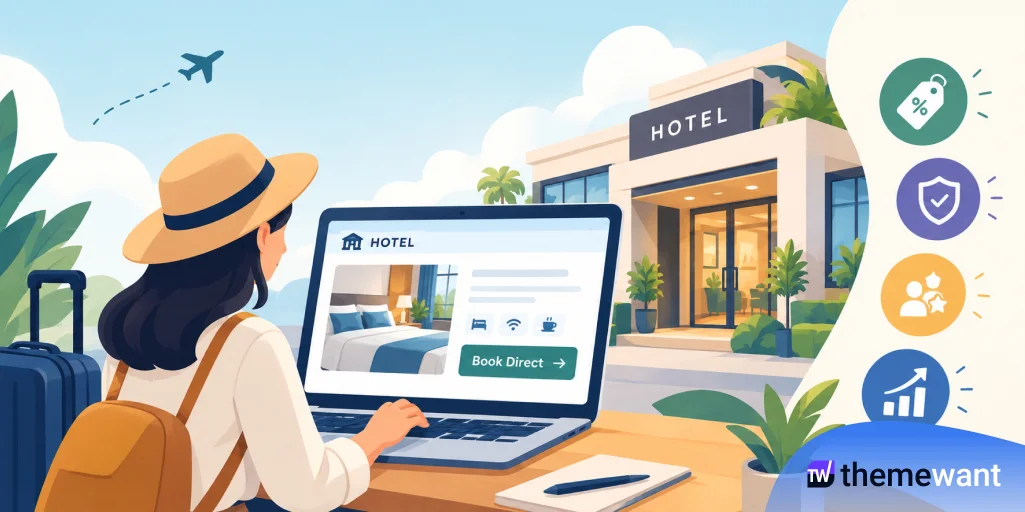
Picture this: a guest finds your hotel on Booking.com, scrolls through the photos, reads a couple of reviews, and books three nights.
Good news, obviously. A booking’s a booking.
Except — part of that money is going to the platform that sent the guest your way. And when they come back in six months, odds are they’ll just book through the same platform again, because that’s the habit now.
Here’s the alternative version of that story.
The guest spots your hotel on an OTA, but before hitting “reserve,” they Google your property name. They land on your website, see a slightly better deal, and book directly instead.
You get the reservation. You get the guest’s actual email. No commission eaten off the top.
That’s the shift worth chasing.
Getting more direct bookings isn’t about cutting OTAs out of your life. It’s about making your own website the place people actually want to book through. And you don’t need a huge budget or a complicated tech stack to start — you need to fix the stuff that’s currently losing you bookings.
Let’s get into it.
Why This Actually Matters
OTAs like Booking.com, Expedia, and Agoda got big because they solved a real problem: discoverability. A small independent hotel can show up in front of international travelers without spending a fortune on ads. That part’s genuinely useful.
But it’s not free, and I mean that literally — commissions on OTA bookings can be steep, and for a hotel running on thin margins, that adds up fast.
Quick example. Say your hotel does 100 bookings a month, averaging $200 a night. That’s $20,000 in room revenue. At a 15% commission (a fairly typical number), you’re handing over $3,000.
Now say 40 of those bookings had come directly through your site instead. That’s $8,000 in revenue that skips the commission entirely — roughly $1,200 saved, before you even factor in payment processing or marketing costs.
Doesn’t sound massive on paper. Over a year, it adds up to something real.
And the commission savings aren’t even the whole story. Direct guests are easier to build a relationship with — you can email them, personalize their stay, get them to come back. There’s also some evidence direct bookings skew higher in value: SiteMinder’s 2025 booking trends data put the average direct-website booking at $516, versus $312 for OTA bookings in the same dataset.
That gap won’t hold for every property. But it’s a decent reason to stop treating your website like an afterthought.
1. Make Your Website Actually Worth Booking Through
Honest question: if someone finds your hotel on Booking.com and then clicks through to your actual website — does it give them a reason to stay there?
A lot of hotel websites are pretty. Nice hero image, elegant font, some dreamy copy about “unforgettable experiences.” And then you go looking for availability and it takes five clicks. The book button is hiding somewhere. You have no idea what you’re actually going to pay until the very last screen.
Pretty isn’t the same as effective.
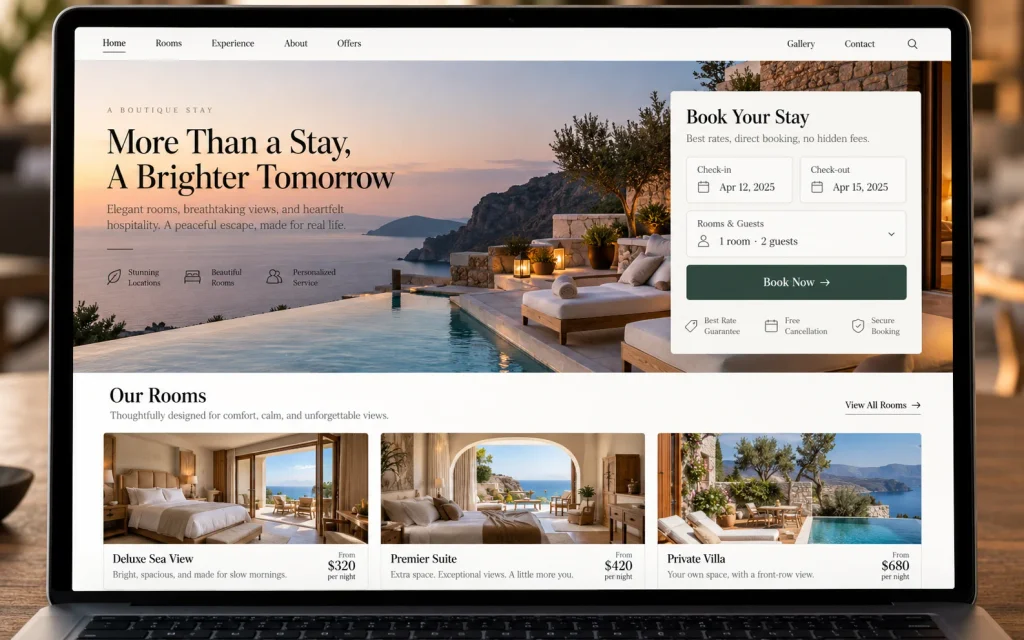
What a booking-ready site actually needs:
- Real photos — rooms, bathrooms, common areas, the view (or lack thereof)
- A “Book Now” button that’s actually visible, especially on mobile
- Room details that matter: bed size, occupancy, what’s included
- Live availability and prices you don’t have to dig for
- Plain-language cancellation and payment terms
- Reviews that sound like real people wrote them
- A phone number or contact form that isn’t buried
- A booking flow that doesn’t make people think
Don’t write “comfortable accommodation and outstanding hospitality.” Nobody books a room because of that sentence. Say which rooms face the ocean. Say whether breakfast’s included. Say how far the beach actually is. Specifics let people picture themselves there — and that’s what gets the click.
2. Give People an Actual Reason to Book Direct
If your website shows the exact same room, same price, same everything as the OTA listing — why would anyone bother switching habits?
You don’t need to slash your prices to compete. Honestly, constant discounting is a trap — guests start expecting it, and your margins take the hit permanently.
Add value instead. Depending on your property, that could be:
- Free breakfast for direct bookers
- Early check-in / late checkout, when you can swing it
- A small welcome gift or drink
- Free parking
- More flexible cancellation terms
- A room upgrade if one’s available
- A better rate on longer stays
Compare these two:
OTA: $150/night, room only. Direct: $150/night, breakfast included, late checkout when possible.
Same price. The second one just feels like a better deal — and it is one. Put that message right next to the book button, not buried on a separate “offers” page. Something as plain as “Book Direct & Get Breakfast On Us” does a lot of work.
Just — actually deliver on it. And double-check your OTA agreements don’t restrict you from offering exclusive direct rates, because some do.
3. Strip the Friction Out of Booking
Think of the last time you tried to buy something online and the checkout process made you want to close the tab. Too many fields. Slow payment page. No confirmation that anything actually went through.
Hotel guests hit the same wall. And unlike a $20 impulse buy, a confusing hotel booking form is something people will just abandon and go book on the OTA instead, where they trust the process.
The ideal flow is boring and short: pick dates → pick a room → enter details → pay → get confirmation. That’s it. No surprises, no extra steps nobody asked for.
Good booking software should also match how your property actually runs — minimum stay rules, blocked dates, your preferred payment setup. A small guesthouse might want to approve bookings manually; a busy city hotel probably wants instant confirmation and online payment. Pick the tool that fits your workflow, not the other way around.
And test it yourself. Actually book a room on your own site using your phone. Better yet, hand your phone to someone who’s never seen the site and watch where they get stuck. Those sticking points are costing you reservations right now.
4. Show Up on Google
Not everyone starts on an OTA. Plenty of people just type into Google:
“Best boutique hotels in London” “Family hotel near the beach” “Hotel near Manchester Airport with parking”
And a lot of OTA-first travelers still end up searching for the hotel’s actual name afterward. That’s your opening.
Start with your Google Business Profile. Keep the name, address, phone, and website current. Upload photos that look like your actual property, not stock-photo fantasy. Reply to reviews — yes, even the annoying ones.
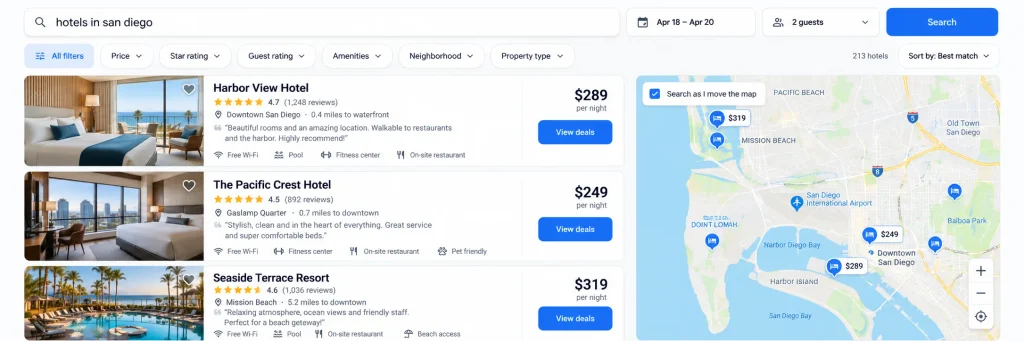
Build pages for what people are actually searching. Near a convention center? Write a page about distance, transport options, and business amenities. Near an airport, beach, or university — same idea. Don’t chase “best hotel” as a keyword; that’s a losing fight. Chase the specific searches that match your actual location and guests.
Check whether you’re eligible for Google’s free booking links. These can surface your rates directly in search results, but you typically need a compatible booking-connectivity setup — just having a booking form on your site isn’t enough. Worth asking your booking provider about.
5. Be a Local Guide, Not Just a Hotel Listing
People aren’t always searching for a hotel. Sometimes they’re searching for an experience, and the hotel part comes later.
A couple planning an anniversary trip might search for romantic restaurants nearby. A family might look up kid-friendly activities. A business traveler might just want to know the fastest way from the airport.
Your website can answer those questions — and in doing so, quietly put your hotel in front of people who weren’t searching for hotels at all.
Some blog ideas that actually pull their weight:
- “10 Things to Do Near Us This Weekend”
- “A Local’s Guide to [City]’s Best Restaurants”
- “Where to Stay in [City] for a Family Trip”
- “Getting from [Airport] to [Destination], the Easy Way”
- “Best Time of Year to Visit [Destination]”
Make these genuinely useful — actual distances, actual recommendations — not sales pitches dressed up as blog posts. One well-researched guide beats five rushed ones written purely to hit a keyword count.
6. Stop Ghosting Your Past Guests
Getting a new guest usually takes more effort than getting a returning one. And yet most hotels pour all their marketing energy into first-timers and never follow up with anyone who’s already stayed.
Think about who checked out last month. Some of them are coming back to the same city for work. Some are planning their next trip already. Some would recommend you to a friend if you just… reminded them you exist.
Where you have permission to reach out, a simple post-stay email goes a long way. Nothing salesy — something like:
“Thanks for staying with us! Hope you had a great trip. If you’re ever back in town, we’d love to host you again — check our site for direct booking perks.”
That’s it. No hard sell needed. Returning guests respond well to small, genuine gestures — a modest loyalty rate, an occasional exclusive offer. And obviously, respect consent and unsubscribe rules; nobody wants to feel tracked.
7. Use Social Media to Show the Actual Experience
Hotels have a built-in advantage on social: people already like looking at travel content. A sunrise from the balcony. Breakfast being plated. The rooftop view at golden hour. This stuff does more work than a polished “Book Now” graphic ever will.
Try a quick room walkthrough video, a behind-the-scenes look at the breakfast prep, a local tip, a guest testimonial (with permission). If you’re in a place with seasonal character — don’t fight it, lean into it. A hotel surrounded by autumn color doesn’t need to pretend it’s a beach resort.
Keep your website link visible in your profile, and link the actual relevant booking page when you’re promoting something specific. Social gets attention; your website has to convert it.
8. Let Reviews Do the Trust-Building
Nobody books somewhere unfamiliar on vibes alone. They want to know: is it clean, does it match the photos, is the location actually convenient, are the staff decent to deal with?
Encourage honest reviews — send guests a direct link so it’s not a hassle. And feel free to feature good reviews on your own site, assuming you’ve got the rights to.
Skip the vague “Amazing hotel!!” type testimonials — they don’t tell anyone anything. A review that mentions the room was quiet, breakfast was good, and the station was a five-minute walk does far more convincing.
For the bad reviews — respond like an adult. Acknowledge the issue, say what you’re doing about it. Don’t argue in public. People understand that things go wrong sometimes; they’re watching how you handle it.
9. Build Packages an OTA Can’t Just Copy
Sometimes the best hook isn’t a discount — it’s an experience nobody else is offering.
Countryside hotel? Bundle a two-night stay with breakfast and a guided local activity. Business-traveler-friendly property? Package a quiet workspace, solid Wi-Fi, and flexible checkout.
A few starting points:
- Romantic weekend — two nights, breakfast, a small in-room touch
- Family getaway — family room, breakfast, a local attraction tie-in
- Work-from-hotel — good desk setup, reliable internet, flexible checkout
- Extended stay — a fair nightly rate for longer visits
You don’t need all four on day one. Pick whichever matches your most common guest, launch it, and watch what happens — views, bookings, actual revenue impact. Adjust from there.
10. Treat Mobile Like It’s the Main Event (Because It Is)
Someone’s on a train, bored, scrolling. They find your hotel through Google and start comparing rooms on their phone. If the text is too small, the images crawl, or the date picker doesn’t work right — they’re gone. You never even know you lost them.
Mobile isn’t a “nice to have” anymore; for a lot of hotels it’s the majority of traffic. Check the basics:
- Is the book button visible without endless scrolling?
- Can someone actually pick dates without fighting the calendar widget?
- Do room photos load fast and look decent on a small screen?
- Is the price breakdown readable without zooming?
- Does the payment step feel secure and simple?
Skip the popups that block the booking form — that’s an easy way to lose someone who was two taps from converting. And don’t assume it’s fine just because the homepage looks nice on your own phone. Run the whole booking flow, start to finish, on a few different devices.
11. Turn Today’s OTA Guest Into Tomorrow’s Direct Guest
OTAs aren’t the enemy here — they’re often how people find you in the first place. The problem is when every future booking from that same guest keeps routing through the same third party forever.
Your shot at changing that starts the moment they arrive. Deliver a good stay. Make your hotel name memorable. Keep checkout smooth. Give them an actual reason to book direct next time.
Your front desk team mentioning it casually at checkout works better than you’d think:
“Hope you enjoyed your stay — if you’re back this way, check our website, we’ve got some returning-guest perks.”
Low-key, not pushy. Just be careful here — respect your OTA agreements and don’t misuse guest contact info you got through the platform. The goal is earning the next booking through a better experience, not working around the rules.
12. Figure Out Which Marketing Is Actually Working
More traffic doesn’t automatically mean more bookings. You could pull in thousands of social visitors and convert almost none of them.
Track a handful of numbers that actually matter:
| Metric | What it tells you |
|---|---|
| Website visitors | Raw traffic |
| Booking conversion rate | % of visitors who actually book |
| Direct booking share | How much of your business is direct vs. OTA |
| Average booking value | Revenue per reservation |
| Booking abandonment | Where people drop off |
| Acquisition cost | What each booking costs you, by channel |
Say your site gets 2,000 visitors a month and 30 bookings — that’s a 1.5% conversion rate. Fix the booking flow and get that to 50 bookings from the same traffic, and you’re at 2.5%. That’s 20 extra bookings with zero extra traffic spend.
These numbers are illustrative, not universal — but the point stands. Watch conversion, not just visits.
13. Pick a Booking System That Fits Your Property
You can nail the SEO, the socials, the photography, the perfect offer — and still lose the booking if the actual reservation process is clunky.
For WordPress-based hotel sites, a booking plugin is usually the practical route. What to look for, at minimum:
- Clear room listings and live availability
- Flexible pricing and occupancy settings
- Minimum/maximum stay controls
- Date blocking
- A straightforward way to collect guest info and confirm bookings
- Payment support that fits your market
- A mobile experience that doesn’t feel like an afterthought
If you’re selling rooms across multiple channels, double-booking prevention matters a lot — look into whether you need a channel manager or sync integration alongside your plugin.
Worth mentioning: Easy Hotel Booking is one WordPress option built around exactly this — managing listings, availability, and booking requests from inside WordPress. Reasonable fit for smaller hotels and guesthouses that want more control without an enterprise-grade system. Worth checking the current feature set and payment options against what your property actually needs before committing.
14. Don’t Try to Do All of This at Once
Reading a list like this can make it feel like you need fourteen new initiatives running simultaneously. You don’t — and trying usually means nothing gets done properly.
A realistic first month:
Week 1 — Fix the booking flow. Try booking a room on your own phone. Fix whatever’s confusing or broken.
Week 2 — Build trust. Refresh photos, clean up your Google Business Profile, get a few new reviews in.
Week 3 — Add one direct-booking perk. Pick one — breakfast, a returning-guest rate, whatever fits — and make it visible near the book button.
Week 4 — Start measuring. See where bookings are actually coming from, where people drop off, what’s working.
After that, layer in the SEO content, the email follow-ups, the packages. This isn’t an overnight fix — it’s a channel you build steadily.
Common Ways Hotels Sabotage Their Own Direct Bookings
Sometimes it’s not a demand problem. It’s a handful of small, fixable mistakes:
- Burying the booking button — don’t make people hunt for it
- Hiding the real price until the last step
- Offering zero reason to book direct over the OTA
- Ignoring mobile entirely
- Using outdated photos that don’t match reality
- Never following up with past guests
- Obsessing over traffic instead of conversions
- Trying to kill OTAs entirely instead of balancing both channels
None of these alone will tank your bookings. All of them together quietly will.
A Few Common Questions
What even counts as a direct booking? Any reservation made through your own channels — website, phone, in person — rather than through an intermediary like Booking.com or Expedia.
How should a small hotel start? Mobile-friendly site, working booking engine, accurate Google listing, real reviews, one solid reason to book direct. Expand from there.
Should I just avoid OTAs altogether? No — they’re genuinely useful for discovery. Most independent hotels do best using OTAs to get found and steadily building their direct channel alongside them.
How do I get more bookings without paid ads? Organic search, a solid Google Business Profile, useful local content, real reviews, and repeat guests. Slower than ads, but it compounds.
Do I actually need a booking engine? If you want online reservations, yes — something that handles availability, pricing, and the actual transaction. Smaller places sometimes get by with a request-based workflow instead.
Can I grow direct bookings without cutting prices? Yes, and honestly it’s the better move. Breakfast, flexible checkout, a decent package — value beats discounting most of the time.
The Short Version
OTAs aren’t going anywhere, and they shouldn’t — they bring you guests you’d otherwise never reach. But your hotel doesn’t need to depend on them for every booking.
The strongest direct-booking strategy isn’t one clever promo. It’s the whole experience — someone finds your hotel, gets real information, sees the value of booking direct, and goes through a process that doesn’t annoy them. Then you actually deliver a good stay.
Next time they’re planning a trip, you’re the first name that comes to mind.
Start with the website. Make booking painless. Give people an actual reason to choose you. Build something that outlasts a single reservation.
If you’re on WordPress and want a simpler way to manage room bookings, it’s worth a look at Easy Hotel Booking to see if it fits your property.
